MiraculumDei
MiraclesTimelineMapAbout

World Atlas

Eucharistic Miracles

144 documented cases spanning 15 centuries, across 40+ countries. Filter by type or Church approval status.


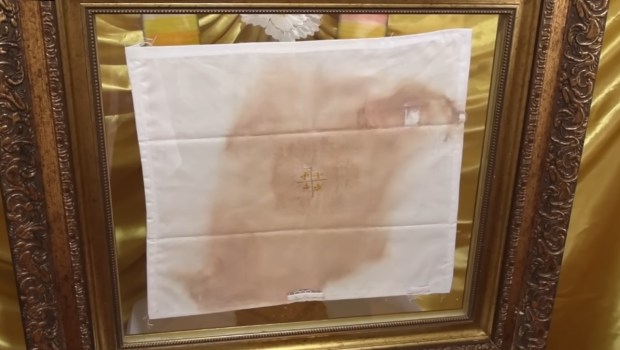
The blood-stained corporal discovered in the tabernacle of the El Espinal community chapel in San Juan, Honduras, on June 9, 2022. Testing revealed human blood, type AB+. Bishop Walter Guillén Soto recognized the event as a Eucharistic miracle in 2023.

Honduras

San Juan

2022 · San Juan


On the afternoon of June 9, 2022 — the feast of Jesus Christ, Eternal High Priest — about fifteen people gathered for the Liturgy of the Word at the chapel of El Espinal, a rural community of roughly sixty families near San Juan in the department of Intibucá, Honduras. The chapel, dedicated to the Apostle James, had no resident priest; José Elmer Benítez Machado, an extraordinary minister of Holy Communion appointed two years earlier, led the service. At approximately 5 p.m., Benítez Machado opened the tabernacle to distribute previously consecrated hosts. He found the corporal — the white linen cloth folded over a wooden ciborium — stained with what appeared to be human blood. No one present could account for the stains. Two Sacred Heart missionaries, Father Marvin Sotelo and Father Oscar Rodriguez, secured the corporal and notified Bishop Walter Guillén Soto, the first bishop of the Diocese of Gracias (erected April 27, 2021). The bishop was skeptical. "I'm not that prone to naively believing in things," he told EWTN Noticias. "Logic makes us prudent, in terms of believing things without sifting through them and without analyzing them." Nearly three months later, in late October 2022, the bishop ordered scientific testing. The corporal was first examined at the Santa Rosa de Copán Medical Center, about 30 miles from Gracias, and then sent to the DISA Test toxicological center in Tegucigalpa for comprehensive analysis. Tests revealed that the stains were human blood, type AB with a positive Rh factor (AB+) — a blood type estimated at roughly 2.5% of the Honduran population. Analysts ruled out wood resin, animal blood, pigments, and artificial application; the cloth showed no fungus, mold, or contamination. Bishop Guillén Soto subsequently recognized the event as a Eucharistic miracle. At the request of Archbishop Gábor Pintér, the apostolic nuncio in Honduras, the scientific evidence and notarized witness oaths were sent to the Vatican for further investigation. The corporal remains sealed and in the bishop's custody pending the Vatican's review.
BloodScientific
Primary promotional image for the Eucharistic miracle in Vilakkannur, India

India

Vilakkannur

2013 · Vilakkannur


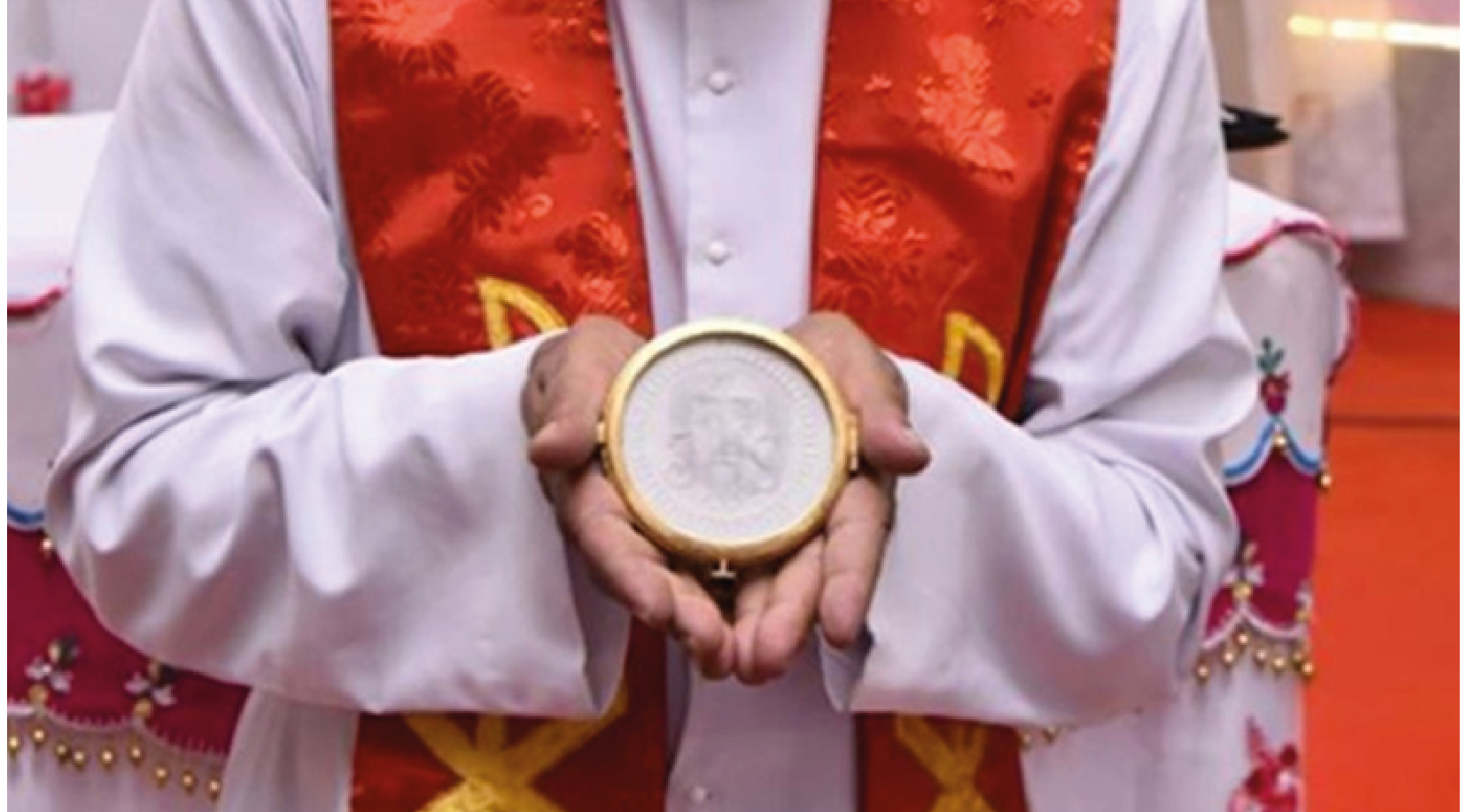
On November 15, 2013, during morning Mass at Christ the King Church in Vilakkannur, Thrissur district, Kerala, India, Father Thomas Pathickal was celebrating the Eucharist. At the moment of consecration, while elevating the large Host, Father Pathickal noticed a mysterious spot on it. As the Mass progressed, the spot grew brighter and gradually revealed what appeared to be the face of Jesus Christ. The phenomenon was observed by Father Pathickal and numerous faithful present, including religious sisters and lay people. As news of the miracle spread, thousands of people flocked to the remote village church, located about 50 kilometers east of Kannur town. The influx was so great that police and vigilance department officials had to manage the crowds as people and vehicles blocked the road to Paithalmala. The Archdiocese of Tellicherry, under Archbishop Joseph Pamplany, established a canonical investigation commission to examine the event according to Church protocols. The diocese commissioned multiple independent scientific studies by different research institutes to analyze the Host's composition and the nature of the visible image. All scientific studies reached the same conclusions: the image of Christ's face was present within the substance of the Host itself, formed by the same substance as the Host, not applied externally through artistic means. This case is unique among Eucharistic miracles—no blood, no tissue, only a face, radiant and unmistakably human, appearing on the bread itself. Chemical analysis and microscopic examination ruled out natural explanations including bacterial contamination (*Serratia marcescens*), fungal growth (mold), or external application of pigments. The image has remained stable and visible for over 12 years. The diocesan investigation (2013-2024) compiled extensive documentation including witness testimonies, scientific reports, and theological analysis. These findings were forwarded to the Congregation for the Doctrine of the Faith in Rome for evaluation. On March 19, 2025, the Congregation for the Doctrine of the Faith officially stated that no canonical obstacle remained to the recognition of the Eucharistic event. The Vatican confirmed this as an authentic Eucharistic miracle through the apostolic nuncio to India. The official public declaration was made by Archbishop Leopoldo Girelli (apostolic nuncio to India) on May 31, 2025, at Christ the King Church, Vilakkannur. This recognition marks a historic milestone: India's first Vatican-approved Eucharistic miracle in the nation's centuries-long Catholic history. The miracle has strengthened Eucharistic devotion throughout India and Southeast Asia, attracting pilgrims from across the continent.

ApparitionScientific
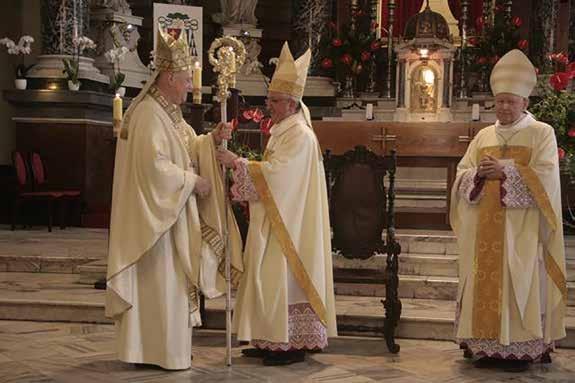
Three bishops in ceremonial attire during a religious event in a church setting.

Poland

Legnica

2013 · Legnica


On December 25, 2013 (Christmas Day), during Holy Mass at St. Hyacinth's Church (Kościół św. Jacka) in Legnica, Poland, a vicar accidentally dropped a consecrated Host while distributing Communion to an altar server. Following Church rubrics, it was placed in a water-filled container (vasculum) and stored in the tabernacle to dissolve. About two weeks later, priests at the parish noticed the Host had not dissolved and a red stain measuring roughly 1.5 × 0.5 cm had appeared on its surface. Parish priest Father Andrzej Ziombra reported the finding to Bishop Stefan Cichy, who appointed an ecclesiastical commission on January 16, 2014 and commissioned scientific analysis on January 21. The Department of Forensic Medicine at Wrocław Medical University, led by Prof. Tadeusz Dobosz, excluded bacterial contamination, fungal growth, and chemical causes — including Serratia marcescens, a bacterium that produces red pigment and has historically accounted for 'bleeding host' reports. The results were suggestive but inconclusive, finding structures most similar to heart tissue. A second opinion was sought from the Department of Forensic Medicine at Pomeranian Medical University in Szczecin, led by Prof. Mirosław Parafiniuk. The Szczecin analysis concluded that the sample contained cross-striated muscle fragments most similar to human heart muscle, with alterations that often appear during agony. Mitochondrial DNA sequencing indicated human origin. Prof. Parafiniuk noted the material was degraded and of microscopic size. Dr. Barbara Engel, a cardiologist who served on the diocesan commission, stated at a press conference that UV microscopy with an orange filter identified the tissue as human myocardium, while noting that the blood on the Host itself had not been tested. In January 2016, Bishop Zbigniew Kiernikowski (Cichy's successor) presented the findings to the Congregation for the Doctrine of the Faith in Rome. Acting on the Congregation's recommendations, the bishop issued a communiqué on April 10, 2016 (read in all diocesan churches on April 17) stating the Host 'bears the signs of a Eucharistic miracle' and instructing that a suitable place be prepared for veneration of the relic.

BloodScientificChurch Approved
Illustration depicting the Eucharistic miracle event with figures and a monstrance.

Poland

Sokółka

2008 · Sokółka


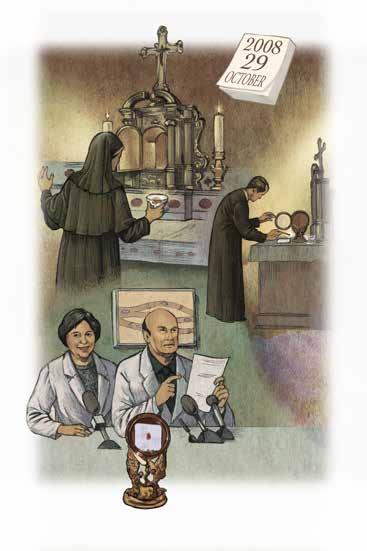
On October 12, 2008, during 8:30 AM Mass at St. Anthony of Padua Church in Sokółka, Poland, a priest accidentally dropped a consecrated Host during Communion distribution. Following liturgical protocol, the Host was placed in water and secured in a locked safe by Sister Julia Dubowska, the sacristan. Seven days later, Sister Julia opened the safe expecting to find dissolved bread. Instead, she discovered the Host had not dissolved despite a week in water, and strange red formations appeared in the center, resembling blood stains. She immediately notified the priests, who contacted Archbishop Edward Ozorowski of Białystok. On January 7, 2009, Archbishop Ozorowski commissioned two independent scientists from Medical University of Białystok to analyze the sample using transmission electron microscopy. Both Professor Maria Elżbieta Sobaniec-Łotowska (pathomorphology specialist) and Professor Stanisław Sulkowski (cardiac tissue expert) worked independently and reached identical conclusions: the sample appeared to contain what they identified as heart muscle tissue from a living person nearing death. The findings were extraordinary. The scientists identified cross-striated muscle fibers, intercalated discs unique to cardiac muscle, and specific lesions observable only in living tissue showing signs of pre-death agony. Most remarkably, Professor Sobaniec-Łotowska noted the heart muscle fibers were "deeply intertwined with that of the bread, in a way impossible to achieve with human means"—not surface contamination but an inexplicable integration at the cellular level. Ordinary cardiac tissue would be expected to decompose within days under such conditions. Yet this tissue showed no decomposition or bacterial degradation, maintaining structural integrity without any preservatives. An Ecclesiastical Commission verified the chain of custody and confirmed no foreign substance had been added. On October 14, 2009, the Metropolitan Curia of Białystok issued a public Communication stating the event 'is not opposed to the faith of the Church; rather, it confirms it.' In 2011 the Host was transferred in solemn procession to the Chapel of Our Lady of the Rosary in the church for permanent exposition and veneration. The phenomenon occurred in Poland, homeland of St. Faustina Kowalska, who received the Divine Mercy revelation from Jesus showing rays flowing from His Sacred Heart. For believers, the cardiac tissue at Sokółka—bearing agony markers and pre-death lesions—serves as a visible sign pointing to Christ's suffering Heart from which Divine Mercy flows. This apparent sign appeared 3.5 years after the death of Pope St. John Paul II, who called for renewed "Eucharistic amazement," and is seen by the faithful as affirming Poland's centuries of Eucharistic devotion through Nazi occupation and Communist oppression.

BloodScientificIncorruption
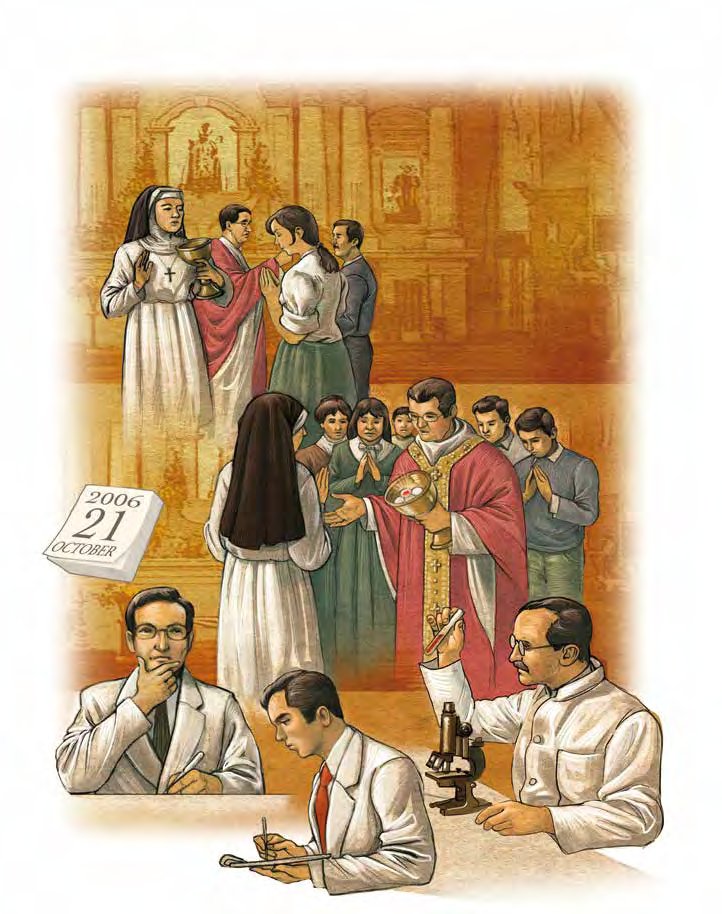
An illustration depicting a priest distributing Communion to parishioners, with scientists observing the event.

Mexico

Tixtla

2006 · Tixtla


On October 21, 2006, during a spiritual retreat at St. Martin of Tours parish in Tixtla, Guerrero, Mexico (approximately 10 miles east of Chilpancingo), a religious sister serving as extraordinary minister of Holy Communion noticed a consecrated Host in her hands had begun to effuse a reddish substance similar to blood. She immediately turned with tears to alert the celebrating priests. Approximately 600 people attended the retreat. Bishop Alejo Zavala Castro was immediately notified and convened a theological commission (2006-2009). In October 2009, the Bishop appointed Dr. Ricardo Castañón Gómez (clinical psychologist specializing in brain biochemistry, former atheist who converted after Buenos Aires investigation) to lead a comprehensive scientific research program. Over three years (October 2009 - October 2012), fragments of the bloodstained Host were sent under blinded conditions to multiple independent laboratories: Gene Ex genetics laboratory (Bolivia), Francisco Marroquín University (Guatemala), Patología Médica (Mexico), laboratories in United States, and multiple forensic medical laboratories specializing in immunohistochemistry and genetics. Findings were presented on May 25, 2013 at a diocesan symposium in Chilpancingo. REMARKABLE FINDINGS • Reported as human blood with hemoglobin; DNA results are disputed (some analyses reportedly failed to recover identifiable human DNA, and critics attribute findings to contamination of a sample handled by many people over years) • Two forensic studies using different methodologies showed substance originates from INTERIOR of Host (excludes external application) • Reported blood type AB (also reported for Lanciano and the Shroud of Turin), though forensic critics caution this may reflect bacterial antigens on a contaminated sample • Cardiac muscle (myocardium) with elongated cells • LIVING TISSUE - lacerated with recovery mechanisms, intact white blood cells, red blood cells, active macrophages engulfing lipids, mesenchymal cells with elevated biophysiological dynamism • FRESH BLOOD IN 2010: While upper part coagulated since 2006, underlying internal layers showed FRESH BLOOD in February 2010 (4 years after event) Expert conclusion: 'No study exists that can maintain alive a cardiac tissue in this situation... this is truly unexplainable for science.' On October 12, 2013, Bishop Zavala Castro issued a pastoral letter recognizing the 'supernatural character' and declaring it a 'Divine Sign' and 'true miracle' with 'no natural explanation.' A successor bishop later stated (c. 2020-2022) that the diocesan process was not concluded and ordered a new investigation; Rome has not approved the case, which the Vatican treated as a 'Eucharistic phenomenon.'

BloodScientific
A photograph of the Taj Mahal with its reflection in the water.

India

Chirattakonam

2001 · Chirattakonam (Trivandrum)


On April 28, 2001, at 8:49 AM during the beginning of the Annual Novena to St. Jude Thaddeus at St. Mary's Syro-Malankara Catholic Church in Chirattakonam (near Trivandrum), Kerala, India, Rev. Fr. Johnson Karoor exposed the Most Holy Sacrament in the monstrance for public adoration. After a few moments, he noticed what appeared to be three distinct dots on the Holy Eucharist. He invited the faithful present to observe the three dots and asked the congregation to remain in prayer. The monstrance was then reposed in the tabernacle. Over approximately one week (April 28 - May 5, 2001), the three dots reportedly began to form a more complete image. On May 5, 2001, Fr. Karoor opened the tabernacle and saw in the Host 'the likeness of a human face, similar to that of Christ crowned with thorns.' As minutes passed during adoration, 'the image became more and more clear.' To verify he was not alone seeing it, he asked his altar server: 'What do you notice in the monstrance?' The altar server independently responded: 'I see the figure of a man.' This confirmed objective visibility. Fr. Karoor immediately summoned a photographer; per his deposition, all the photos were developed within two hours, and 'with the passing of the time the face in every photo became more and more clear.' REMARKABLE COINCIDENCE May 5, 2001 was the day the Gospel reading was John 20 (Doubting Thomas demanding to see Christ's wounds). ECCLESIASTICAL RESPONSE No formal commission report has been published; claims of a diocesan commission of theologians, medical doctors, and photography experts circulate only on secondary websites and cannot be traced to any primary archeparchial source. The documented ecclesiastical response is the written statement of Archbishop Cyril Mar Baselios, who verified the event, stating: 'For us believers what we have seen is something that we have always believed... If our Lord is speaking to us by giving us this sign, it certainly needs a response from us.'

Apparition
An image of a piece of the Host that transformed into blood, displayed in a circular frame.

Argentina

Buenos Aires

1996 · Buenos Aires


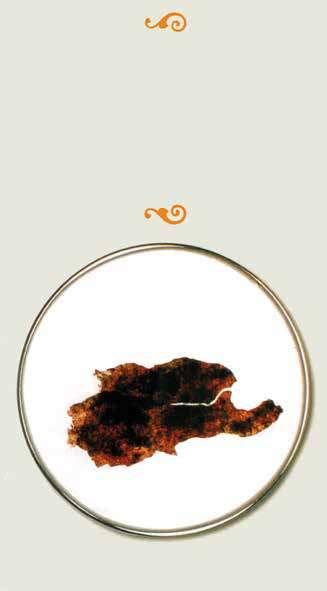
On August 18, 1996, at the Church of Santa María y Caballito Almagro in Buenos Aires, a consecrated Host fell during Communion distribution. Following proper protocol, Fr. Alejandro Pezet placed it in water in the tabernacle to dissolve. Eight days later, Fr. Pezet found that the Host had not dissolved but appeared to have developed what looked like bloody tissue. He immediately photographed the phenomenon and reported it to then-Auxiliary Bishop Jorge Mario Bergoglio. Bishop Bergoglio—who would later become Archbishop (1998-2013) and Pope Francis in 2013—ordered the Host to be preserved and photographed, establishing a chain of custody for the scientific investigation that followed. Bergoglio, as auxiliary bishop and later archbishop, authorized the investigation and permitted local veneration; he was associated with the case through his years in Buenos Aires until his 2013 election. Between 1999 and 2005, under Bergoglio's authorization, tissue samples were sent to laboratories worldwide. Dr. Frederick Zugibe, former Chief Medical Examiner of Rockland County, performed a blind analysis—unaware of the tissue's origin. He reported what appeared to be heart muscle (left ventricle) with white blood cells suggesting the tissue was alive when sampled. Serological testing reported blood type AB, also reported for the Shroud of Turin. (The 'blind test' framing is disputed, and forensic critics caution that AB typing here cannot establish a single human source.) This Buenos Aires phenomenon is part of a reported pattern. Across several modern alleged Eucharistic miracles—Buenos Aires, Sokółka, Legnica, and Tixtla—investigators have reported finding what appeared to be human cardiac tissue with signs of agony and trauma. Some also report blood type AB. For believers, this consistency is seen as significant; for skeptics, it may raise questions about methodology or suggest alternative explanations. The Church's discernment considers multiple factors beyond scientific data alone. This phenomenon profoundly impacted Bergoglio's future papacy. His emphasis on mercy, encounter, and accompanying those on the peripheries was deepened by this experience of investigating an apparent sign of Christ's enduring presence even when the Host was accidentally discarded. For those who accept its authenticity, the Buenos Aires phenomenon speaks powerfully of Divine Mercy: a visible sign interpreted by believers as Christ's Sacred Heart remaining present to our skeptical age. Today, the Buenos Aires Host remains in perpetual exposition at Santa María Parish, drawing pilgrims worldwide. The miracle has been integrated into global Eucharistic evangelization efforts, including Saint Carlo Acutis's international exhibition, continuing to proclaim the Real Presence to a world hungry for authentic encounter with the living Christ.

BloodScientificDesecrationIncorruption
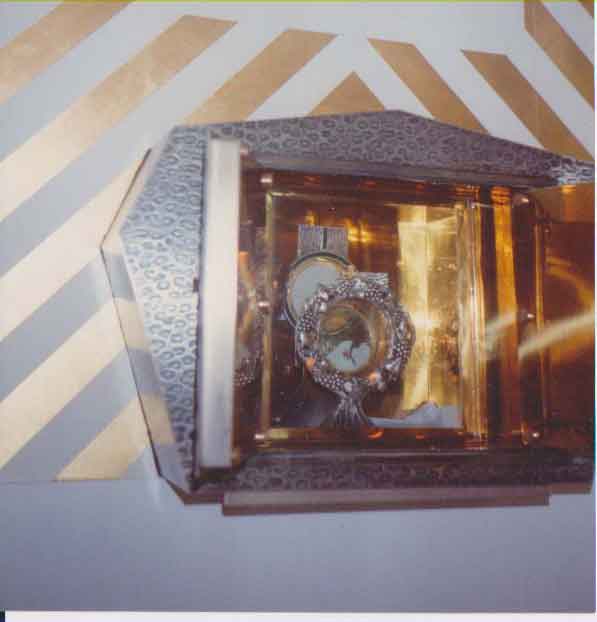
This image shows a reliquary containing the Eucharist associated with the Betania miracle in Venezuela. The event, witnessed by María Esperanza, involved apparitions of Jesus and the Virgin Mary, highlighting the deep spiritual significance of the site.

Venezuela

Betania

1991 · Cúa


During midnight Mass on the feast of the Immaculate Conception, December 8, 1991, at the Marian Shrine of Finca Betania near Cúa, Venezuela, Father Otty Ossa Aristizábal was celebrating the Eucharist. After dividing a large Host into four pieces and consuming some, he returned the remaining pieces to the paten. Upon looking down, he observed that one piece had developed a red spot from which a red substance began to emanate. The blood flowed from one side of the Host particle without staining the remaining Eucharistic species on the paten. Multiple pilgrims present at the Mass witnessed the phenomenon and confirmed the priest had no visible wounds. Father Otty's own blood was later tested and did not match the blood on the Host. Bishop Pio Bello Ricardo of Los Teques convened a special commission to investigate and ordered scientific testing. Laboratory analysis in Caracas confirmed the substance was human blood of type AB positive—matching the blood type reported for the Shroud of Turin and the Eucharistic Miracle of Lanciano. The Eucharistic miracle occurred at Betania, a site already recognized by the Church for Marian apparitions. María Esperanza Medrano de Bianchini (1928-2004) had reported apparitions of the Virgin Mary there beginning in 1976, and Bishop Pio Bello Ricardo issued a decree in 1987 recognizing them as authentic—one of the few Marian apparitions to receive formal Church approval. The Eucharistic miracle deepened the site's significance as a center of both Marian and Eucharistic devotion. The miraculous Host is permanently preserved and exposed for veneration at the convent of the Augustinian Recollect Nuns of the Sacred Heart of Jesus in Los Teques, Venezuela.

BloodApparitionScientific
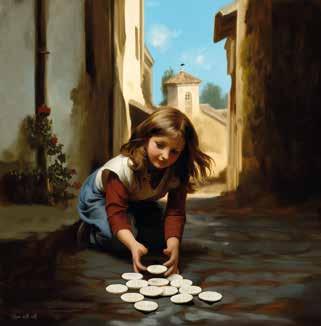
A young girl kneeling on a cobblestone street, gathering consecrated Hosts in her hands.

Italy

San Mauro La Bruca

1969 · San Mauro La Bruca


On the night of July 25, 1969, unknown thieves broke into the Parish Church of Sant'Eufemia in San Mauro La Bruca, in the province of Salerno, and stole various sacred objects, including a golden chalice containing consecrated Hosts from the tabernacle. After leaving the church, the thieves threw the consecrated Hosts and the chalice lid onto a small wall in front of a side door. The following morning, the desecrated Hosts were found by a young girl named Gerardina Amato. The remarkable aspect of this event is that the Hosts are preserved to this day, remaining intact for over 50 years without any signs of decay or decomposition. According to the laws of nature, unleavened bread should deteriorate within weeks, yet these Hosts have defied natural processes. In 1994, after 25 years of detailed analysis, Msgr. Biagio D'Agostino, Bishop of Vallo della Lucania, acknowledged the miraculous preservation of the Hosts and authorized the cult. This miracle is considered significant as it represents one of the last recognized Eucharistic miracles in Italy. The event has been recognized as a 'Eucharistic Miracle' and is commemorated annually with a Eucharistic Day celebration. The preservation of these Hosts serves as a powerful testimony to the Real Presence of Christ in the Eucharist, demonstrating that what appears to be bread is actually the Body of Christ, which remains incorrupt as a sign of His divine nature.

IncorruptionDesecrationScientific
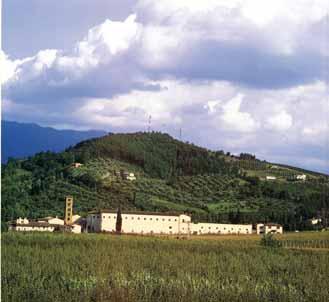
The Abbey of S. Maria of Rosano, founded in 780, witnessed the miraculous bleeding and weeping statue of the Sacred Heart.

Italy

Rosano

1948 · Rosano


In 1948 at the monastery church of Rosano, near Florence, a statue of the Sacred Heart of Jesus was donated by a devout person to fulfill a promise made during World War II, thanking God for protection during the devastating conflict. The statue, which is of natural height, began to manifest extraordinary signs shortly after its installation. On various occasions between 1948 and 1950, the statue was witnessed bleeding and weeping, displaying what witnesses described as tears and blood flowing from the sacred image. The miraculous statue became a focus of devotion and pilgrimage for the faithful, particularly those seeking hope and healing in the aftermath of the war's devastation. Medical analyses of the blood were conducted and the results preserved in monastery archives along with finger towels and purificators soaked with the blood, confirming it was real human blood—an impossibility for a statue made of inanimate materials. The Holy Office conducted a thorough investigation through Visitator Father Luigi Romoli, O.P., who personally interrogated all the nuns under strict secrecy. The Holy Office ordered the statue removed to a secret location on November 14, 1950, where it remained until being returned to Rosano in 1952. Bishop Giovanni Giorgis saw the events as an appeal from the Lord for fidelity, reparation, and prayer in the post-war period. The phenomenon of the bleeding and weeping Sacred Heart statue at Rosano is considered by believers to be a sign of Christ's compassion and His continuing presence among His people, particularly significant in the aftermath of World War II. The statue continues to be venerated in the monastery church.

BloodScientific
Primary promotional image for the Eucharistic miracle in Balasar, Portugal

Portugal

Blessed Alexandrina Maria da Costa - Eucharistic Sustenance

1942-1955 · Balasar


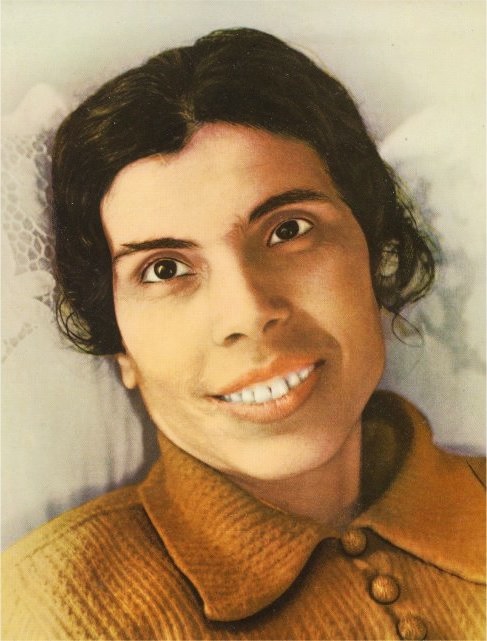
Alexandrina Maria da Costa (1904-1955) became paralyzed at age 21 after jumping from a window to escape assault and preserve her purity. From 1942 until her death in 1955, she was nourished only by the Eucharist for over 13 years. During hospitalization at Foce del Douro Hospital near Oporto, she was medically supervised for 40 days and nights, with doctors confirming her absolute fast and condition of anuria (absence of urine). From 1938 to 1942, she relived Christ's Passion every Friday for 182 times. On July 30, 1935, Jesus appeared to her explaining her mission to bear witness to the precious nature of the Eucharist, stating: 'I have put you in the world so that you may draw life only from Me, to bear witness to the world how precious the Eucharist is.'

HealingApparition
Primary promotional image for the Eucharistic miracle in Kraków, Poland

Poland

Divine Mercy Apparitions to St. Faustina Kowalska

1931 · Kraków


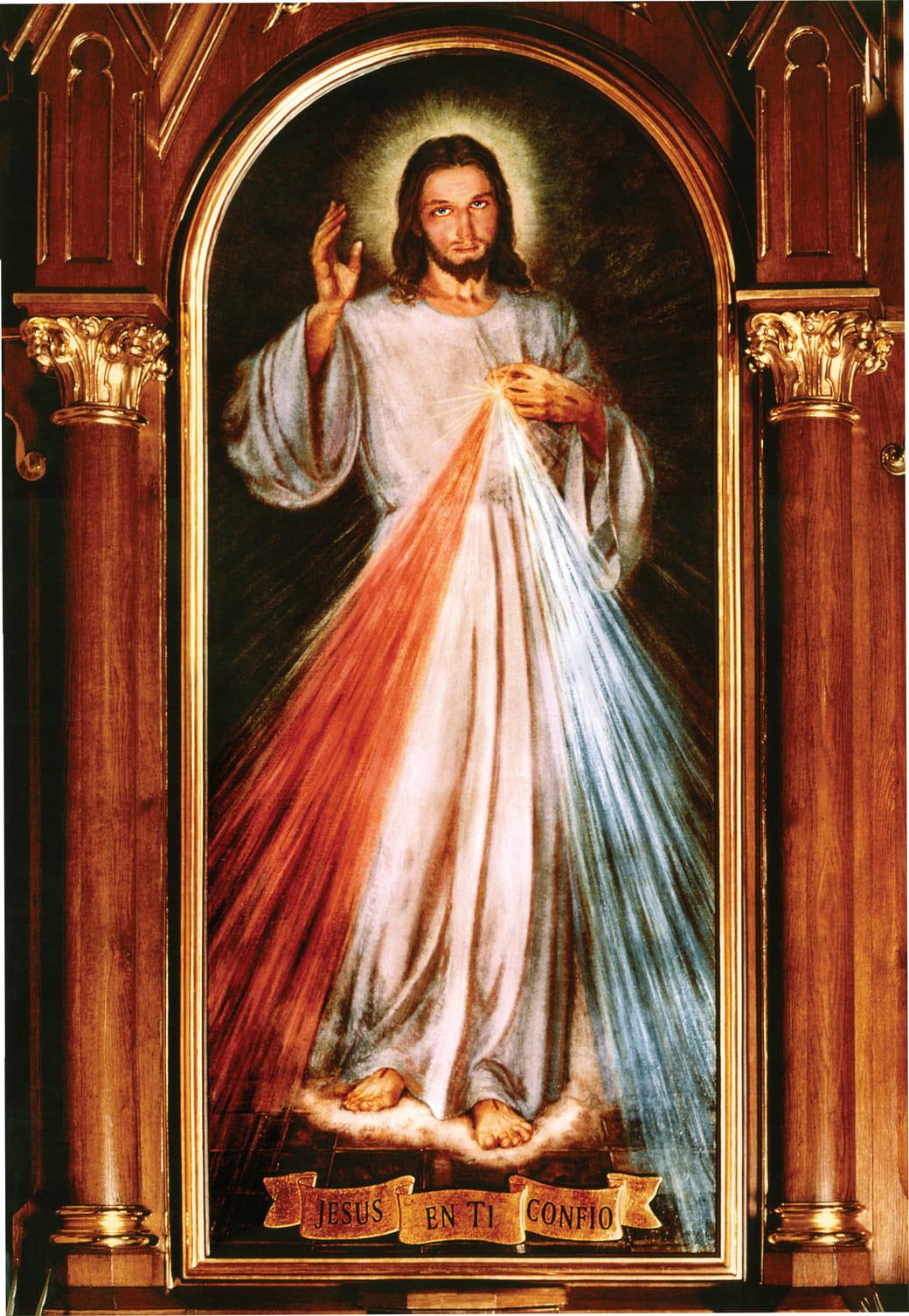
Sister Maria Faustina Kowalska (1905-1938) was a humble Polish nun who became one of the Church's greatest mystics of the 20th century. Between 1931 and 1938, she experienced over 116 mystical visions and conversations with Jesus Christ, most of them profoundly connected to the Eucharist, which she documented in her spiritual diary "Divine Mercy in My Soul." The pivotal vision occurred on February 22, 1931, when Jesus appeared to her as the "King of Divine Mercy," with two large rays emanating from His Heart—one red representing Blood, one pale representing Water—symbolizing the Eucharist and Baptism. But the Eucharistic dimension of her mission went far beyond this initial vision. Throughout her religious life, St. Faustina experienced over sixty visions during Holy Mass alone. Most frequently, she saw the Infant Jesus present on the altar during the consecration. On approximately a dozen occasions, she saw the rays of Divine Mercy emanating from the consecrated Host itself, sometimes covering the entire world—confirming that the Eucharist is the perpetual fountain of God's mercy. St. Faustina's Eucharistic spirituality was extraordinarily deep. She called Holy Communion "the most solemn moment of my life" and wrote: "Each Holy Communion makes you more capable of communing with God throughout eternity." Jesus revealed to her: "In the Host is the power; it will defend you always," and called her "a living host, pleasing to the Heavenly Father." After her death from tuberculosis on October 5, 1938, at age 33, her cause for canonization was championed by Cardinal Karol Wojtyła (future Pope John Paul II). She was beatified on April 18, 1993, and canonized on April 30, 2000. Pope John Paul II proclaimed that the Second Sunday of Easter would henceforth be known throughout the universal Church as Divine Mercy Sunday. Today, the Shrine of the Divine Mercy in Kraków-Łagiewniki receives approximately two million pilgrims annually.

ApparitionChurch Approved

MiraculumDei

A world atlas of eucharistic miracles. Precise, modern, historically authoritative.

Inspired by Saint Carlo Acutis.
Official website

Discover

  • Home
  • Miracles
  • Timeline
  • Map
  • About

Contact

padovanitr1@gmail.com

© 2026 MiraculumDei

Made with love for God by Thiago Padovani